Why Does My Conservatory Get Condensation? Causes & Fixes
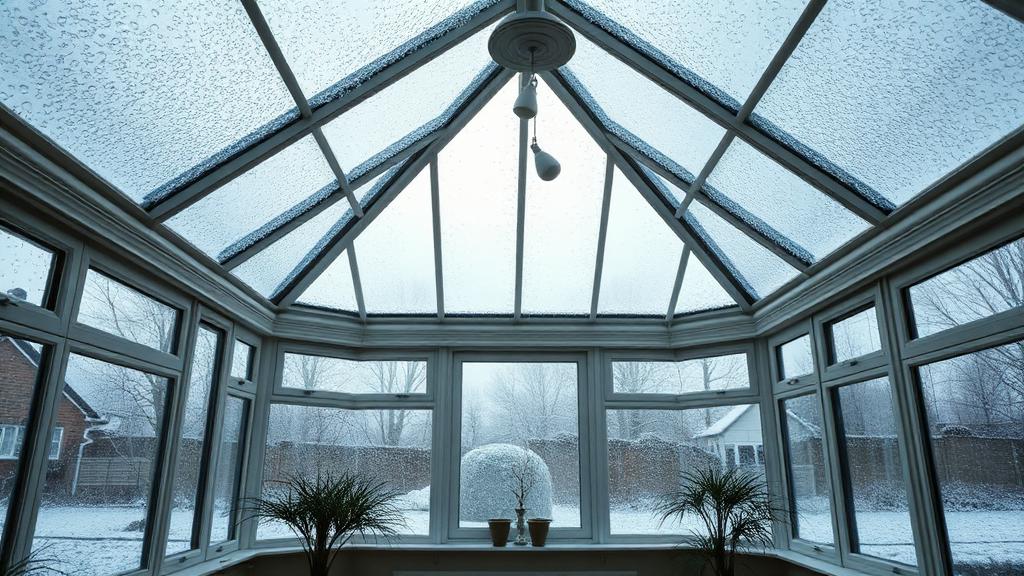
If you wake up to water streaming down your conservatory glass, pooling on the sills, or dripping from the roof, you're not alone. Condensation is one of the most common — and most frustrating — problems homeowners report, especially through the colder months from October to March.
It's not just a nuisance. Left unchecked, persistent condensation leads to black mould on seals, staining on adjoining walls, damaged furniture and even timber decay. The good news: once you understand why it's happening, the fix is straightforward.
Wondering if your conservatory qualifies?
Requesting your free fixed price takes just 2 minutes.
Get My Free Fixed-Price QuoteWhat Causes Condensation in a Conservatory
Condensation forms whenever warm, moisture-laden air touches a surface that's colder than its dew point. Everyday activities — cooking, showering, drying laundry, even breathing — release water vapour into the air. In a well-insulated room, most surfaces stay warm enough for that vapour to remain invisible. In a conservatory, the glass and polycarbonate roof stays only a degree or two above the outside temperature, so warm interior air hits it, cools instantly, and drops its moisture as water droplets.
Why Conservatories Are Worse Than Other Rooms
A conservatory is essentially a large single- or double-glazed box with almost no thermal mass. Compared to a brick-built room it has a huge cold surface area, poor overall insulation, wide temperature swings between day and night, and limited air movement to carry moisture away. That combination makes it the coldest, most condensation-prone room in most UK homes.
Common Household Contributors
Certain habits and features quietly make the problem worse: drying laundry indoors, dozens of houseplants, hot tubs or aquariums, kettles and cookers venting through open doors, blocked or painted-shut trickle vents, and cold-bridged aluminium or older UPVC frames. If you've noticed the problem getting worse over the years, one or more of these is usually the culprit.
The Real Risks of Ignoring It
Short-term condensation is unsightly, but long-term exposure causes real damage — black spot mould on rubber seals, warped and rotted timber sub-frames, blown plaster on the adjoining house wall, ruined soft furnishings, and health issues linked to airborne mould spores. Insurance policies rarely cover damage from persistent damp, so it's worth acting before it becomes structural.
Short-Term Fixes That Help — a Bit
Ventilating on dry days, running a dehumidifier, using extractor fans in the kitchen and bathroom, wiping down glass each morning, and moving plants elsewhere will all reduce moisture load. These help — but they treat the symptom, not the cause. As soon as the roof gets cold again, the condensation returns.
The Permanent Fix — Insulate the Roof
The only lasting solution is to stop warm interior air ever reaching the cold roof surface. The SnugCore™ Ceiling System does exactly that: a rigid timber subframe, a continuous multifoil insulation layer with sealed vapour control, and a plastered, plasterboard or UPVC ceiling finish beneath your existing roof. The new ceiling surface stays warm — well above dew point — so vapour has nothing cold to condense on. It's the same principle a properly insulated bedroom ceiling relies on.
Correct vapour control detailing is critical. Sealed foil overlaps and a continuous vapour barrier prevent interstitial condensation forming above the ceiling, which is where poorly executed DIY insulation typically fails. See how the system works and browse real installations, including our Kettering glass-roof project where condensation and mould were completely eliminated.
For transparent pricing on the SnugCore Ceiling System, view our costs page. Ready to find out if your conservatory is suitable? Book your free survey today.
View Our Pricing
Transparent pricing from £1,495.
Get Your Free Fixed Price
See if your conservatory qualifies.
Frequently Asked Questions
Will an insulated ceiling completely stop conservatory condensation?
In the vast majority of cases, yes. Once the ceiling surface stays warmer than the dew point of the room air, there is nothing cold for moisture to condense onto. You may still see occasional condensation on the glass side walls in extreme conditions, but the roof — the worst offender — is resolved.
Can condensation form above the new ceiling?
Not when the system is installed correctly. The SnugRoof build-up uses a continuous vapour control layer with sealed foil overlaps that stops warm interior air reaching the cold roof above. This is why professional installation matters — poor detailing is the main cause of hidden interstitial condensation in retrofit insulation.
Do I still need to ventilate the room after insulation?
Yes, sensible background ventilation is always a good idea. Keep trickle vents clear and open a window occasionally, especially if you dry laundry or have lots of plants in the room. The insulated ceiling dramatically reduces the risk, but ventilation prevents general household humidity building up.
Is condensation actually damaging my conservatory?
Left long enough, yes. Persistent moisture leads to black mould on seals, rot in any timber components, corrosion of steel fixings, and blown plaster where the conservatory joins the house. Addressing it early is significantly cheaper than repairing the damage later.
Will this help condensation on the windows too?
Insulating the roof warms the whole room, which raises the surface temperature of the window glass and reduces condensation there as well. It won't eliminate window condensation entirely on very cold nights, but most homeowners see a substantial improvement.
Helpful advice like this?
Choose SnugRoof Thermal as a preferred source on Google and Google may show you more of our conservatory advice in future searches and AI results.
See if your conservatory qualifies in 2 minutes.
Request your free fixed-price quote to find out.
Get My Free Fixed-Price Quote